
If someone asked me to give them my very best advice – only one thing – I know what I’d say. It's simple, but doesn't get enough attention.
First, consider this: how many times have you driven somewhere you didn’t intend to go? For me, quite a few. I may find myself at the grocery store instead of the post office. I wasn’t conscious of where I was driving, so my subconscious drove wherever was familiar and easy.
That is what happens when we live on autopilot. We keep moving. We go somewhere. But mental autopilot won’t take us to new and hard-to-reach places.
Conscious, creative, critical thinking is our greatest ability as humans. It can help us achieve more than we imagine.
Think.
Think well.
Think more and more often.
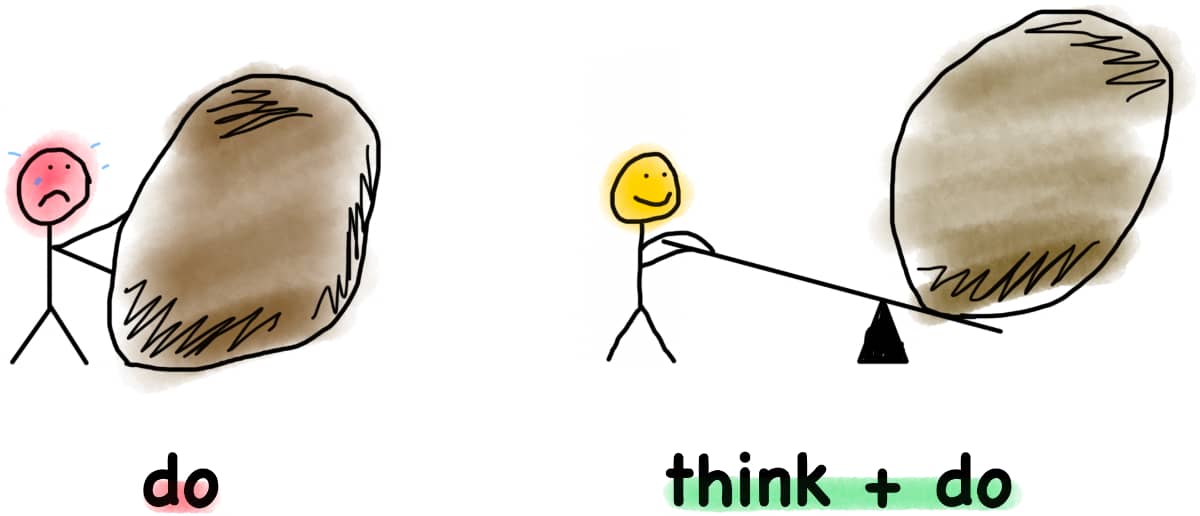
Good thinking = better actions and better outcomes.
You’ll never be and do what you could if you don’t make time to think well. Don’t leave thinking to chance.
For your business and professional life, start your thinking here:
- Where you’re going
- Why it matters
- What you’re doing to get there
- How to do it better
When? As often as helpful. At least once a day.
How much? Very likely more than you are now. At least a few minutes every day. And more time periodically: every few days, weeks, months, quarters, and years.
With whom? Yourself, of course. But also – a little less frequently – with your team.
And how? Find the ways that work well for you. Thinking can look like:
- A walk, hike, or bike ride
- Journaling/writing – on paper or with a keyboard
- An open-minded discussion
- Putting your feet up on your desk
However you do it, summarize your thoughts in a journal, video, or voice memo.
A few more tips:
- Keep a list of questions or topics for your thinking times. Add to it any time you encounter something worth reflecting on.
- Be spontaneous. When you’re feeling stuck or making a decision, open the journal, take a little walk, or have a short phone call with a thinking partner.
- Experiment with new approaches, times, and environments.
- Don’t confuse this kind of thinking with planning. Good thinking precedes good planning.
What is the first step? Schedule two thinking times:
- Daily for 5-10 minutes
- Weekly for 30-60 minutes
That’s just 1% of your time per week.
And no amount of great advice is of any use unless you think it through and consider how to apply it.
Thinking well is the foundation of doing well.